The Evidence Behind Posture and Pain
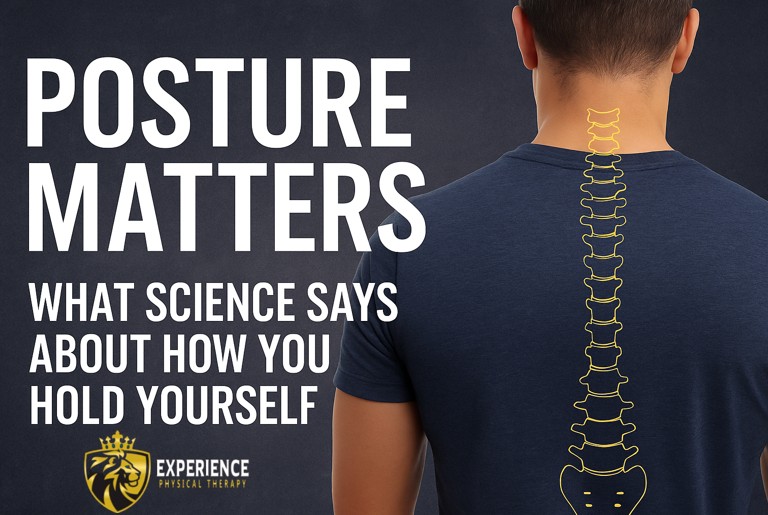
Research has long linked poor postural alignment with musculoskeletal pain, particularly in the neck, shoulders, and low back. A systematic review by Silva et al. (2019) found moderate evidence connecting forward head posture to increased neck pain intensity and disability [1]. Similarly, poor thoracic spine posture has been associated with restricted shoulder mobility and compensatory mechanics during reaching tasks (Kebaetse et al., 1999) [2].
Posture also impacts loading across the spine and lower extremities. A study by Korakakis et al. (2020) demonstrated that postural asymmetries in standing were associated with lumbopelvic movement dysfunction and increased prevalence of low back pain [3]. While posture alone isn't always the root cause of pain, it frequently compounds existing dysfunctions and can be a key driver of compensatory patterns.
More Than Just Sitting Up Straight
When patients hear "posture," many think of stiff backs and rigid rules. At EPT, we reframe posture as dynamic alignment — the ability to adapt your body to the task at hand with efficient, pain-free control. Static posture matters, but how you move through postural transitions matters more.
Rather than prescribing a "perfect" position, we assess postural tendencies in context: How do you stand during prolonged work tasks? How does your scapula track during reaching? Do your hips and spine share the load evenly during gait?
What We Do at EPT
Our treatment approach blends manual therapy with neuromuscular re-education and functional training to restore postural control. We use tools like real-time video feedback, movement screening, and individualized cueing strategies to help patients reconnect with optimal alignment.
From post-surgical shoulder rehab to managing chronic low back pain, posture often plays a role. It's not about posture being the villain — it's about ensuring your system is resilient, responsive, and efficient.
Final Thoughts
Good posture isn't a position. It's a pattern. One that should serve your body, not limit it. If you’ve been dealing with recurring pain or just feel "off" with how you move, it might be time to take a closer look at how your body is holding itself.
At Experience Physical Therapy, posture is not a judgment — it's a gateway to better performance, less pain, and long-term physical confidence.
References
[1] Silva, A.G., Punt, T.D., Johnson, M.I. (2019). "The association between forward head posture and neck pain: a systematic review." Manual Therapy, 24(2), 1-8.
[2] Kebaetse, M., McClure, P., Pratt, N. (1999). "Thoracic position effect on shoulder range of motion, strength, and three-dimensional scapular kinematics." Journal of Orthopaedic & Sports Physical Therapy, 29(7), 381-387.
[3] Korakakis, V., et al. (2020). "Associations between posture and movement dysfunction in people with and without low back pain: A cross-sectional study." Musculoskeletal Science and Practice, 45, 102132.