Creatine: What It Is, What It Does, and What the Research Really Says
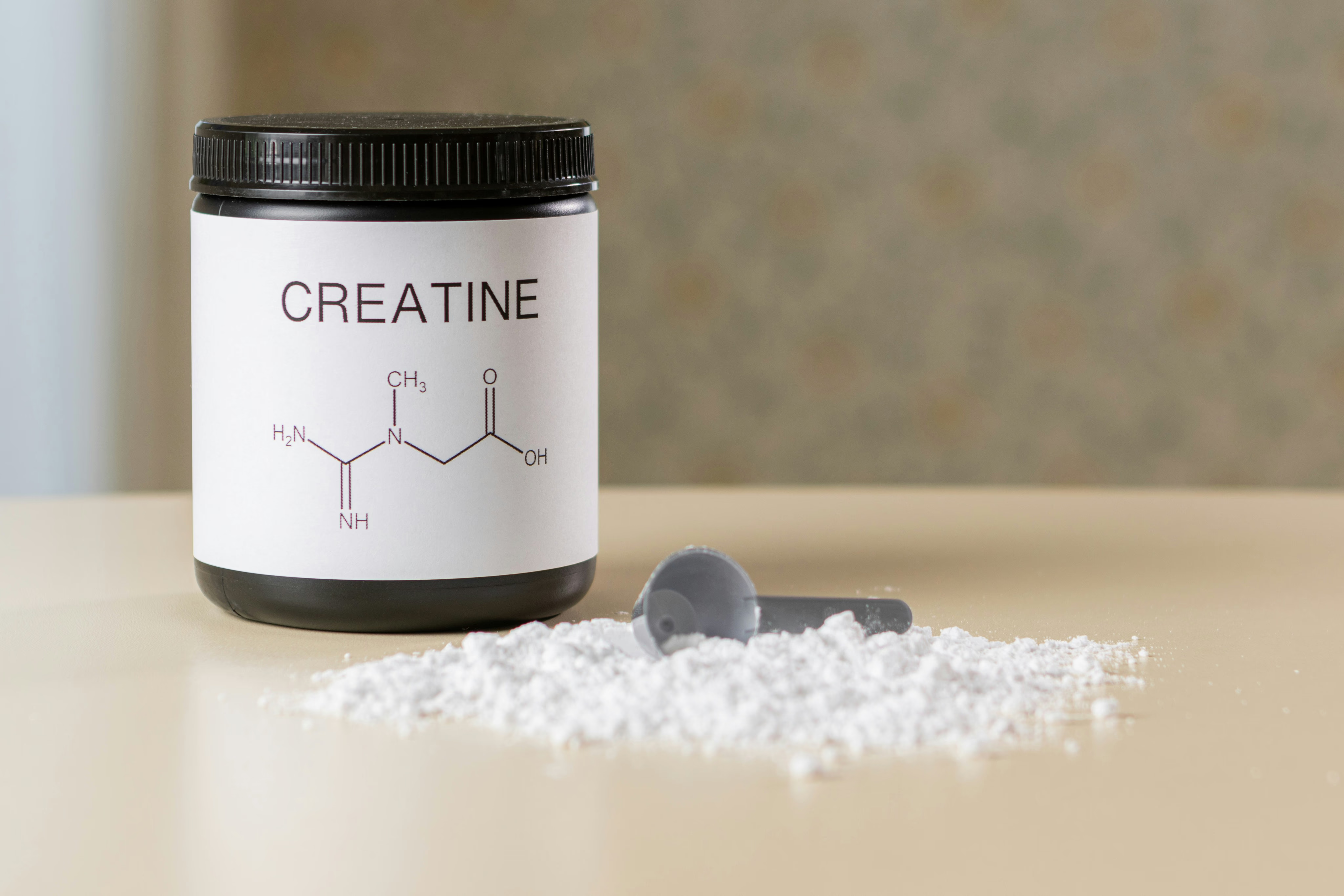
Creatine is one of the most researched and effective supplements for strength, muscle health, cognitive function, and overall physical performance. It’s widely used by athletes, but its benefits extend far beyond sports - making it highly relevant for physical therapy patients, adults seeking improved function, and anyone looking to support healthy aging.
Here is a research-based overview to help you understand what creatine is, how it works, the evidence behind it, and how to use it safely.
What Is Creatine?
Creatine is a naturally occurring compound made from the amino acids arginine, glycine, and methionine. The body stores it primarily in muscle tissue as phosphocreatine, where it plays a critical role in cellular energy production.
Your body makes some creatine, and you get small amounts from foods like beef, pork, and fish - but not enough to reach the levels shown to be beneficial in research.
How Creatine Works in the Body
Creatine’s primary function is to support the ATP-PC system, which provides quick energy for short bursts of activity - such as lifting, climbing stairs, sprinting, or rising from a chair. Think more of explosive movements when we talk about the ATP-PC system.
Here’s what creatine does in the body:
● Replenishes ATP (energy) faster so muscles can contract more effectively
● Supports protein synthesis and prevents muscle breakdown
● Improves muscle cell hydration, which may help recovery and muscle growth
● Supports brain energy metabolism, which is why cognitive benefits are now well documented
Because ATP is required for virtually every muscle contraction and neurological signal, creatine’s effects are far-reaching.
Why You Can’t Get Enough Creatine From Food
Even with a high-protein diet, most people consume only 1-2 grams of creatine per day from food. However, research consistently uses 3-5 grams per day of supplemental creatine to produce measurable benefits in strength, muscle mass, and cognition. More recent research on cognitive health in folks with dementia and acute sleep deprivation show an increase in the dose to get the desired outcomes, but those are highly specific populations.
To reach the research-backed level of creatine intake from food alone, a person would need to eat roughly:
● 1-2 pounds of meat or fish daily
The recommendation is not to eat 1-2 pounds of meat or fish daily. This is impractical for most people and not appropriate or healthy for many patients. This is why creatine supplementation is often recommended, even for omnivores.
Benefits of Creatine: What the Research Shows
1. Increased Strength and Muscle Mass
Creatine is one of the most effective supplements for improving strength and muscle hypertrophy, when paired with resistance training.
● A large meta-analysis found that creatine significantly improves strength and lean mass compared to training alone (Kreider et al., 2017).
● Gains in maximal strength are typically 8-14% higher with creatine.
2. Improved Functional Performance
Creatine enhances short-duration, high-power activities such as:
● Sit-to-stand
● Stair climbing
● Gait speed during power-based rehabilitation
● Older adult functional capacity
Research shows creatine may help counteract sarcopenia in aging adults, leading to improvements in daily living tasks (Candow et al., 2019).
3. Faster Recovery
Creatine has been shown to:
● Reduce muscle damage markers
● Support faster recovery between sessions
● Reduce inflammation after intense exercise
(Santos et al., 2004).
4. Cognitive and Brain Health Benefits
Creatine supports brain ATP and has been shown to improve:
● Working memory
● Mental fatigue resistance
● Processing speed
● Recovery after sleep deprivation
(Avgerinos et al., 2018).
This matters not only for athletes, but also students, night-shift workers, and older adults.
5. Bone Health Support
Emerging evidence suggests creatine may enhance bone health when paired with resistance training by improving muscle pulling forces on bone (Forbes et al., 2021).
Potential Drawbacks or Side Effects
Creatine is considered one of the safest supplements, even with long-term use. Still, some considerations are important:
Common but Mild Effects
● Temporary water retention in muscles (1–3 lbs)
● Occasional GI discomfort (more common with large loading doses)
Kidney Concerns
Creatine does not damage kidneys in healthy individuals.
However, patients with known kidney disease should consult their medical provider before starting.
Hydration
Creatine increases the water inside muscle cells, so adequate hydration is important, especially for active individuals.
How to Take Creatine
Best Form
● Creatine Monohydrate
This is the form used in almost all research. It’s effective and affordable.
Best Dose
● 3-5 grams per day is sufficient for most adults.
● No need for a loading phase, though a loading phase (20 g/day for 5–7 days) saturates muscles faster.
Timing
Creatine works through saturation, not timing. You can take it:
● Morning or evening
● With or without food
● Pre- or post-workout
Many people take it with a meal or shake to reduce any GI discomfort.
Who May Benefit Most
● Individuals in physical therapy working on strength
● Older adults preserving muscle mass
● People following plant-based diets
● Athletes
● Adults with high training or activity loads
If I am vegan, can I take creatine?
● Creatine supplementation is created from sodium sarcosinate (an amino acid derivative) and cyanamide (an organic compound) to create creatine monohydrate. It is not taken from animal sources and thus considered vegan.
Who Should Avoid Creatine
● Individuals with diagnosed kidney disease (unless cleared by a provider)
● Those prone to significant water retention discomfort
● People who are unable to stay adequately hydrated
Key Takeaways
● Creatine supports strength, muscle mass, recovery, and cognitive function.
● Safe for long-term use in healthy individuals.
● Easy to dose and inexpensive.
● Food sources alone cannot provide the amount used in research.
● Useful for physical therapy populations, especially those working on strength, power, and recovery.
References
Avgerinos, K. I., Spyrou, N., Bougioukas, K. I., & Kapogiannis, D. (2018). Effects of creatine supplementation on cognitive function of healthy individuals: A systematic review of randomized controlled trials. Psychopharmacology, 235, 1495–1507.
Candow, D. G., Forbes, S. C., Little, J. P., Cornish, S. M., Pinkoski, C., & Chilibeck, P. D. (2019). Effect of nutritional interventions and resistance training on aging muscle mass and strength. Applied Physiology, Nutrition, and Metabolism, 44(11), 1103–1112.
Forbes, S. C., Candow, D. G., Ferreira, L. H. B., Souza-Junior, T. P., & Galvão, D. A. (2021). Bone biology and the role of creatine supplementation: A narrative review. Journal of Clinical Medicine, 10(6), 1203.
Kreider, R. B., et al. (2017). International Society of Sports Nutrition position stand: Safety and efficacy of creatine supplementation in exercise, sport, and medicine. Journal of the International Society of Sports Nutrition, 14, 18.
Santos, R. V., Bassit, R. A., Caperuto, E. C., & Costa Rosa, L. F. (2004). The effect of creatine supplementation upon inflammatory and muscle soreness markers after a 30 km race. Life Sciences, 75(16), 1917–1924.