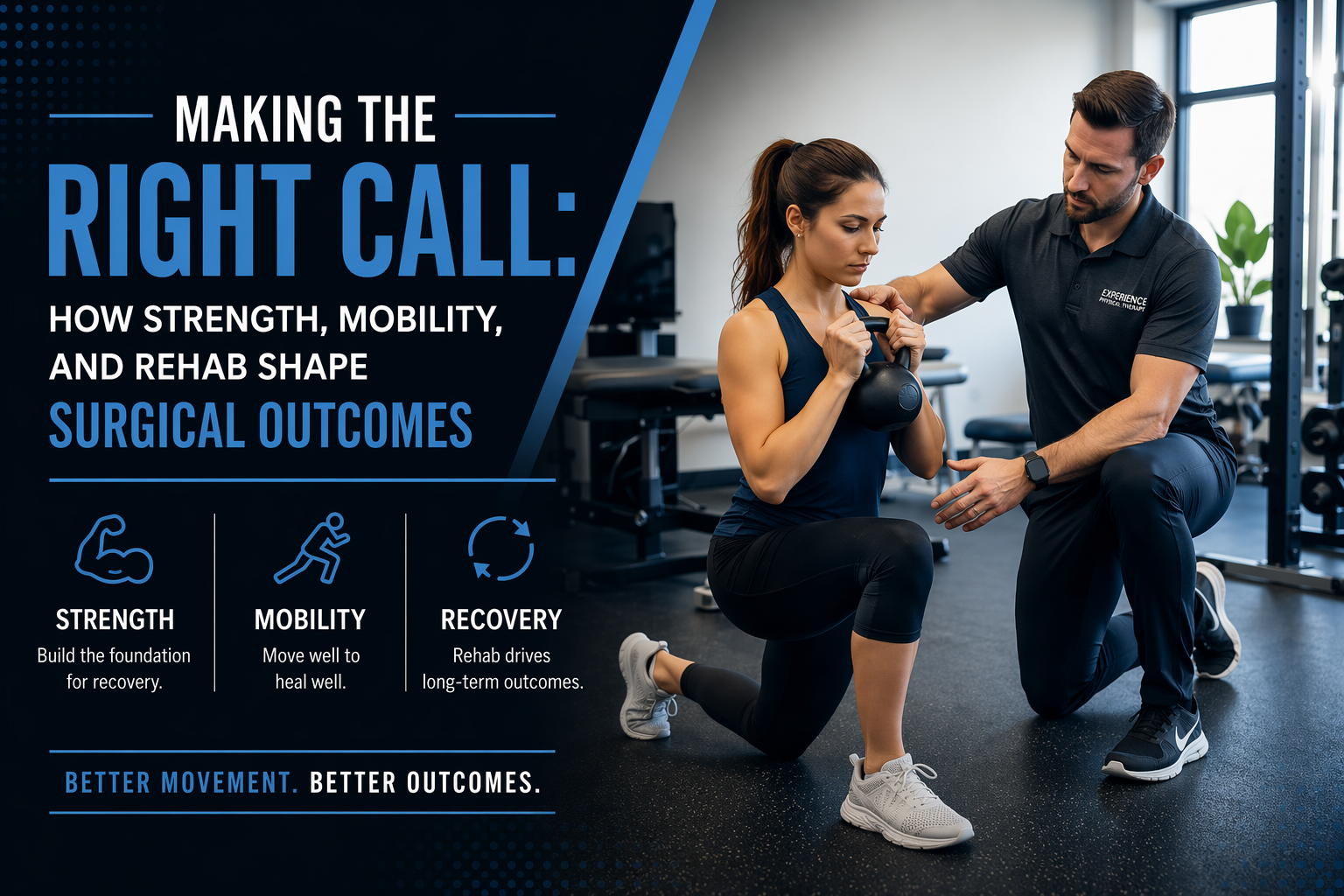

Completing physical therapy is a meaningful milestone. Pain has improved, movement feels more controlled, and strength and stability have increased. You’ve worked through a plan and reached the goals that were set.
But discharge from physical therapy is not the end of the process. It’s a transition, and how that transition is handled often determines whether your progress is maintained or gradually lost over time.
Physical therapy is designed to restore functional capacity. Depending on the situation, that may include improvements in mobility, strength, coordination, tissue tolerance, and overall confidence with movement. By the time you are discharged, you have met measurable benchmarks that indicate you can safely move forward without formal supervision.
At the same time, discharge does not mean your body has reached its highest level of resilience. It means you are prepared to continue on your own. From that point on, the responsibility shifts toward maintaining and continuing to build on what you’ve gained.
This is where many people run into challenges. The first few months after therapy can be a critical period. Structured appointments are no longer part of the routine, accountability naturally decreases, and activity levels often begin to increase again. At the same time, consistency with exercises tends to fade.
That pattern is common, but from a physiological standpoint, the body responds to what it experiences consistently. Strength, mobility, and tolerance to activity improve when they are challenged regularly. When that input decreases, those qualities can begin to decline over time. Without a plan for follow-through, progress can stall or gradually reverse.
Maintaining progress does not require an overly complex program, but it does require intention. Continuing to build strength, keeping up with mobility, progressing activity gradually, and paying attention to early signs of irritation all play a role. The goal is not to stay in therapy indefinitely, but to transition in a way that supports long-term function.
At Experience Physical Therapy, discharge is not treated as a finish line. It is a structured handoff. Before discharge, the focus is on making sure you understand what to continue, how to progress it safely, what to watch for, and when it makes sense to follow up.
For those who want additional structure after formal therapy, there are options to continue building on that foundation. Our approach is designed to support strength, mobility, and movement accountability beyond the clinic, particularly for individuals returning to more demanding work, training, or activity levels. The intention is not to extend care unnecessarily, but to help protect the investment that has already been made in recovery.
Recovery does not stop when therapy ends. Physical therapy helps restore capacity, but ongoing movement and consistency are what help preserve it. What you do after discharge plays a significant role in how well your body continues to perform over time.