It’s Not About Doing More—It’s About Doing It Differently
When most people think about a home exercise program, they picture setting aside a specific block of time each day to get it done. While that approach can be helpful, it’s often not what leads to lasting change.
In many cases, the focus is placed on doing more, rather than doing things in a way that actually fits into daily life. The reality is that your body adapts to what you do consistently throughout the day, not just what you do for a short period of time. If most of your day is spent moving in the same patterns, a brief set of exercises, even when done well, may not be enough to create meaningful or lasting change.
One of the key drivers of progress is proprioceptive awareness, which is your body’s ability to sense position, movement, and control. This doesn’t typically improve from occasional effort. It develops through repetition, frequency, and consistent feedback to your system. Your body is always adapting, and over time it reflects what you reinforce most often.
That’s why a different approach is often more effective. Instead of thinking of your home exercise program as something separate that needs to be completed all at once, it can be more useful to build it into your day. This might mean paying attention to posture while you are working, being more intentional with how you move between tasks, or revisiting certain exercises briefly throughout the day rather than trying to complete everything in one session.
These moments don’t need to be long, but they do need to be consistent. Over time, those small inputs begin to add up and can lead to more meaningful changes in how your body moves and feels.
Another piece that often gets overlooked is accountability. Consistency doesn’t usually happen by accident. It requires some level of structure and follow-through. Having a clear plan and a way to track what you are doing can make a significant difference. It also helps to have a way to communicate when something feels off or unclear so adjustments can be made along the way.
At Experience, we view progress as a shared responsibility. What happens in the clinic is important, but what happens outside of it plays an equally significant role. When there is consistency with a home program, in-clinic sessions tend to be more productive, progress is more steady, and results are more sustainable. Without that follow-through, even well-executed care can have limitations.
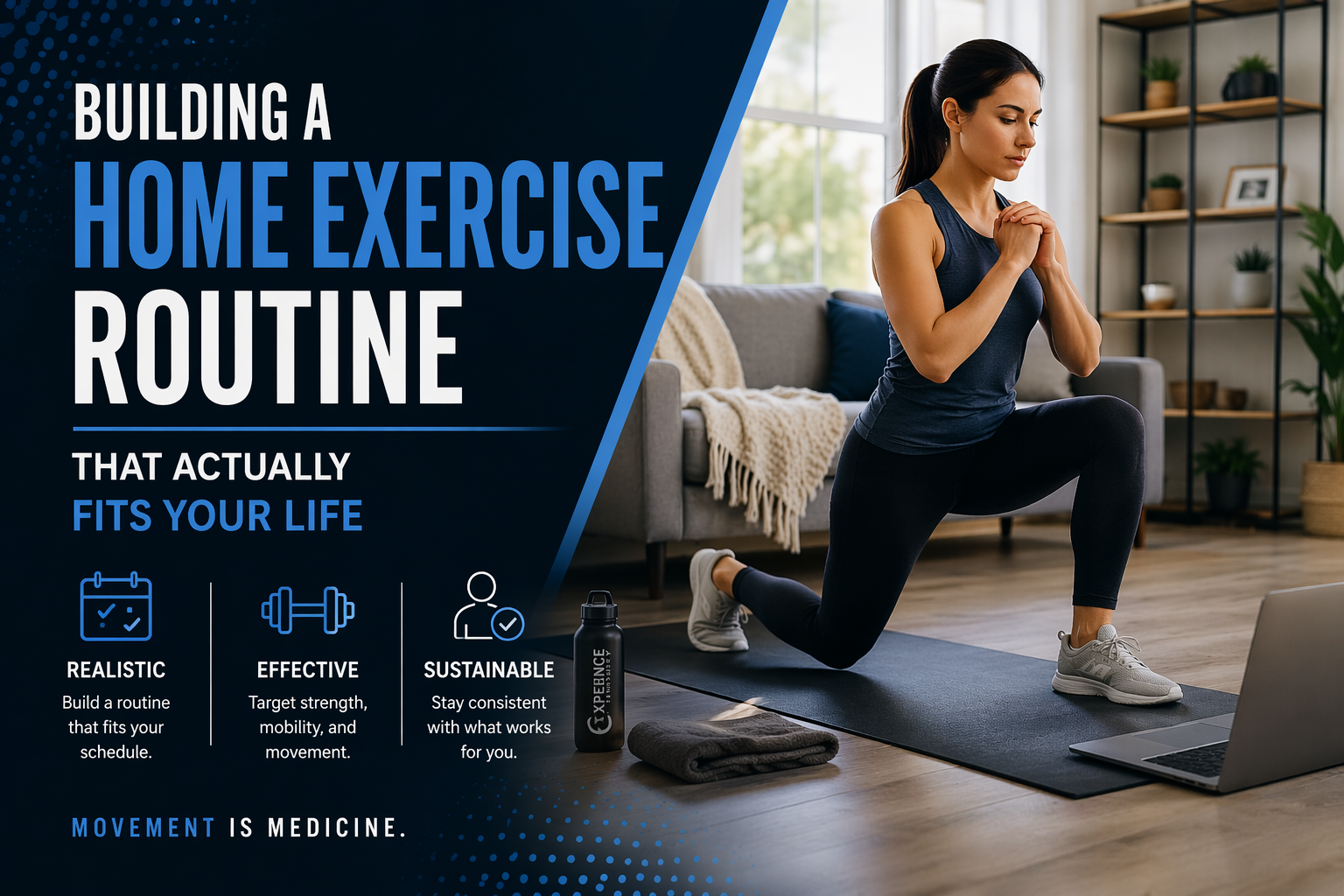
A successful home exercise routine is not about doing more for the sake of doing more. It is about doing the right things, doing them consistently, and building them into your daily life in a way that is realistic and sustainable. When a program fits into your routine, it becomes easier to maintain, and that is what supports long-term progress.
If your current routine feels unclear, inconsistent, or difficult to keep up with, that is not uncommon. In many cases, the solution is not adding more, but simplifying the approach and making it easier to follow. The goal is to create a plan that supports your daily life and continues to move you forward over time.
Because in the end, meaningful progress is not built on one isolated effort. It is built through consistent action that fits into the way you live.