
When dealing with pain or injury, one of the most common questions people ask is, “Do I need surgery, or can I fix this with physical therapy?” It’s a reasonable question, but in many cases, it doesn’t tell the full story.
Surgery and physical therapy are not opposing options. They are part of a broader continuum of care. The more important focus is understanding what your body needs to restore or preserve strength, mobility, and overall function, and how to best support that process over time.
Surgical procedures are designed to address structural issues, such as repairing tissue, stabilizing joints, or replacing damaged surfaces. In many situations, this is necessary and appropriate. However, surgery alone does not restore strength, range of motion, coordination, endurance, or confidence with movement. These are all essential for returning to daily life, work, or recreational activity, and they typically require a structured rehabilitation process.
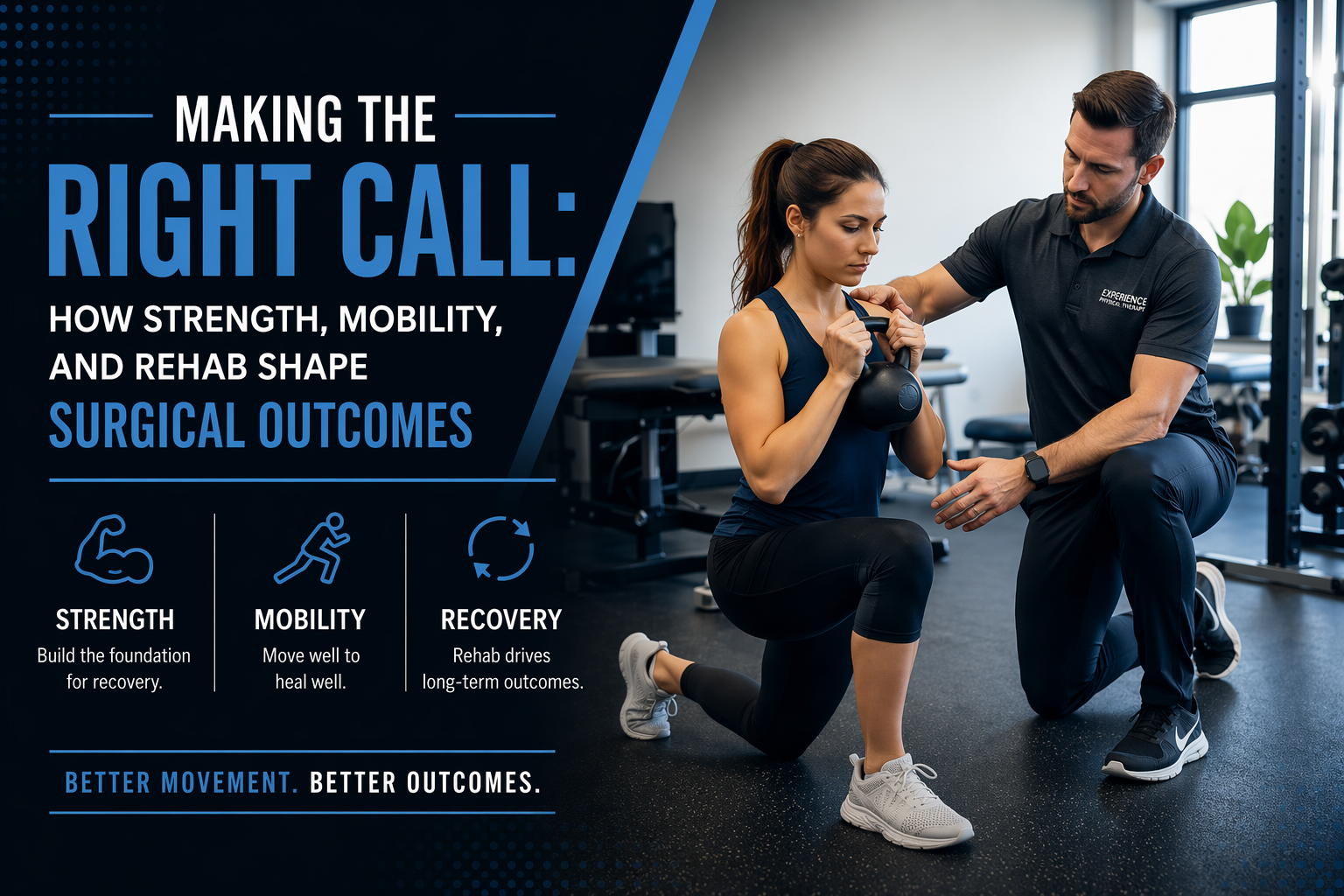
Regardless of whether surgery is part of the plan, recovery is influenced by how well the body is able to move and tolerate activity over time. Strength, mobility, movement quality, and consistency all play a role in how someone progresses. If these areas are limited, it can affect both short-term recovery and long-term outcomes. In some cases, a course of physical therapy may help improve symptoms and function before considering surgical options. In other cases, when surgery is planned, improving these areas beforehand can help support the recovery process afterward.
For individuals preparing for surgery, physical therapy beforehand, often referred to as prehabilitation, can help the body get ready for the demands of the procedure and recovery. This may include improving joint mobility, building strength in surrounding muscles, and practicing movement patterns that will be important after surgery. It can also help establish a baseline, making it easier to track progress during recovery. The goal is not to replace surgery when it is needed, but to help the body enter that process in a better position.
After surgery, rehabilitation becomes an important part of recovery. Physical therapy focuses on restoring range of motion, rebuilding strength, improving balance and coordination, and supporting a gradual return to daily activities. Without consistent rehabilitation, it is common to see ongoing limitations in movement, strength, or overall function. The procedure may address the structural issue, but the work of regaining function happens over time through movement and progression.
Decisions around surgery are best made by looking at the full picture. This includes a person’s history, their current level of function, how they respond to movement and activity, and their individual goals and lifestyle. This process often involves collaboration between healthcare providers, including physicians and physical therapists. Physical therapy plays a role in helping people understand how they are moving, identify limitations, and build a plan to improve function, whether surgery is part of that plan or not.
The question is rarely just surgery or no surgery. A more useful way to think about it is to ask what the body needs to support strength, mobility, and function, and what role rehabilitation plays before and after that decision. Over time, outcomes are not determined by a procedure alone, but by how well the body is supported through movement, consistency, and recovery.